


The State of the Construction Economy
The State of the Construction Economy: What to Expect in 2026
In Short
Reconstruction and adaptive reuse are taking a larger share of...
read more
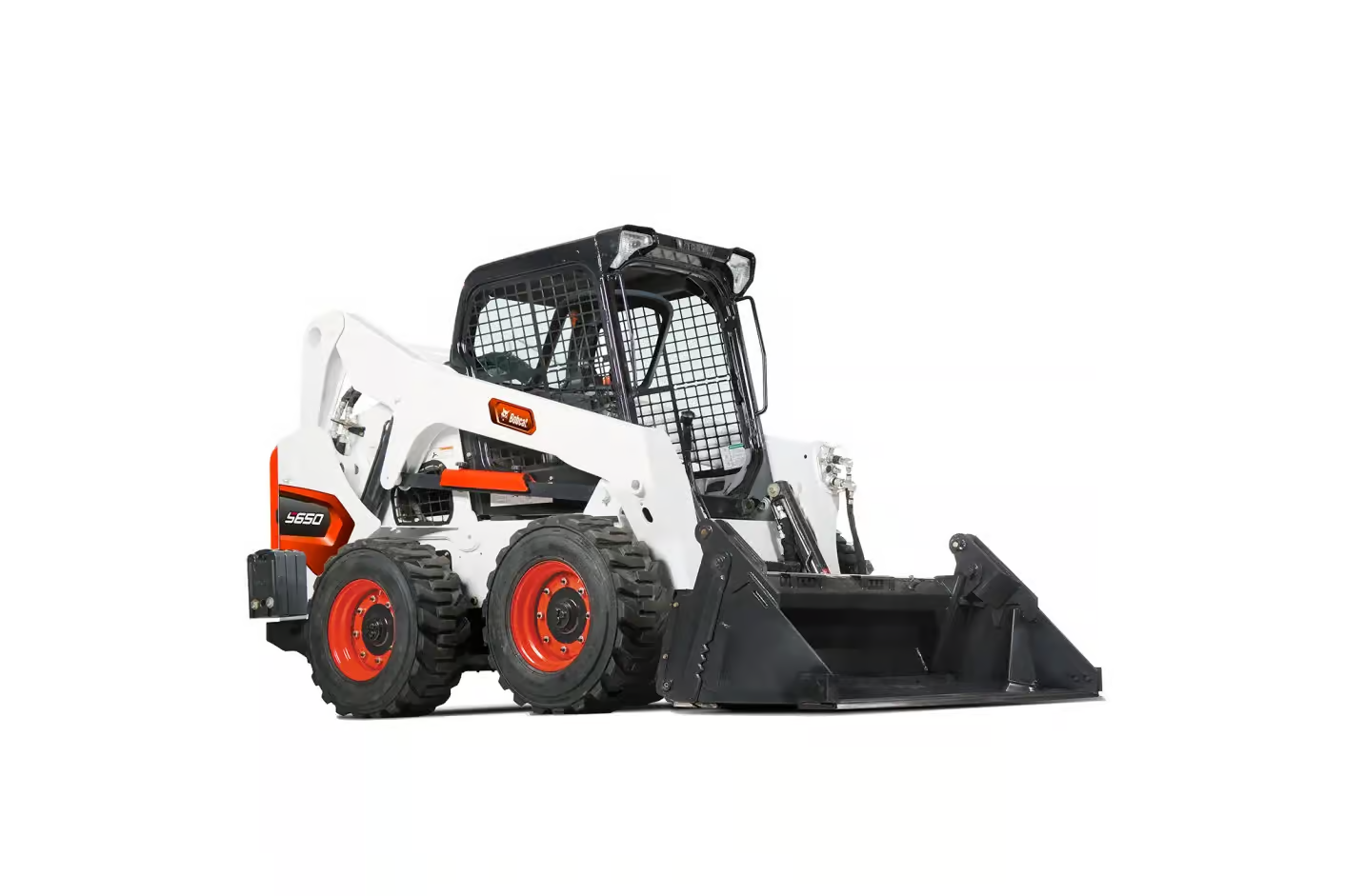
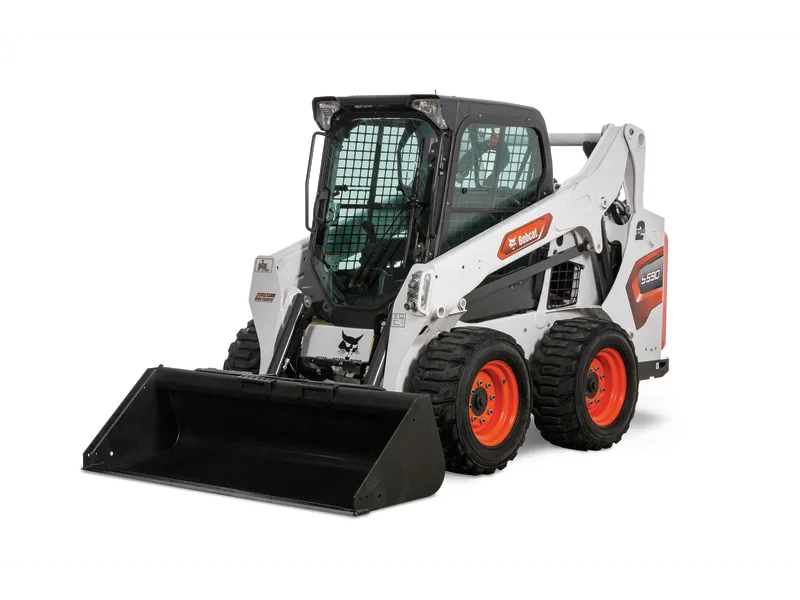
When you’re buying a skid steer for grading and moving dirt, the “best” machine is usually the one that delivers the most production per dollar—without creating downtime risk that kills the savings. That’s why this comparison comes up so often:
Here’s how they stack up in the real world.
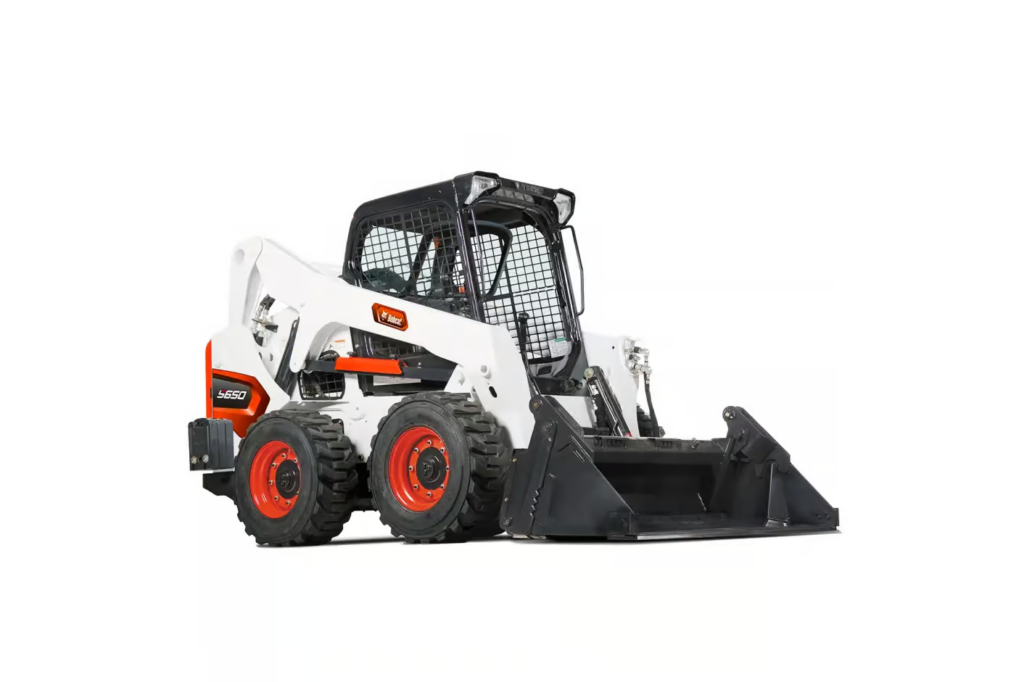
Bobcat lists the S650 at a starting price of $59,146 and key specs include 74 hp, 2,690 lb ROC, 8,061 lb operating weight, and 23 gpm standard aux flow. Bobcat+1
That bigger frame and capacity show up on the job as more stability with a full bucket, more confidence loading, and more margin before you feel like you’re working at the limit.
Bobcat’s published specs for the S590 are 68 hp, 2,100 lb ROC, 6,765 lb operating weight, and 17.1 gpm standard aux flow. Bobcat
For grading and dirt work, that’s still a very capable package—especially when the machine is well maintained and you’re not constantly pushing maximum lift/carry.
For pad grading, spreading base, backfill, moving piles, and general bucket work, a 2020 S590 is typically in its wheelhouse. It’s nimble, easy to maneuver, and plenty strong for day-to-day dirt production—particularly if you’re not routinely loading high-sided trucks or carrying very heavy buckets.
The S650’s advantage shows up when:
The numbers back that up: 2,690 lb ROC on S650 vs. 2,100 lb ROC on S590, plus a heavier operating weight on the S650. Bobcat+1
Since your S590 is a cab machine, it deserves its own callout. Bobcat highlights features like a pressurized enclosed cab on the S590. Bobcat
In real terms, cab comfort isn’t just “nice”, it’s productivity:
If you’re running the machine often, a cab can be one of the highest-ROI “options” you can have.
Used S590 prices vary widely by year, hours, condition, and cab/high-flow packages. Listing sites range from the teens into the $50Ks depending on the unit.
For example,we have seen an enclosed-cab 2016 S590 at $28,500 (1,093 hours) and a 2021 S590 at $35,900 (421 hours)
So, if you truly have a 2020 cab S590 at ~$25K and it’s well maintained, that’s an aggressively strong value—exactly the kind of buy that can beat a new machine on cost-per-hour.
If your work is mainly grading + dirt, the S590 can often deliver the same end result for far less capital outlay. The S650 may produce more per hour, but the question becomes:
Will the additional production and warranty predictability of a $59K+ machine outperform a clean $25K machine enough to justify the extra spend? Bobcat+1
For many owner-operators and smaller crews, the answer is “not unless we’re running it hard every day or downtime is extremely expensive.”
Since your whole value story depends on the machine being “right,” here’s the short inspection list that matters most for grading/dirt:
“Well maintained” is the magic phrase here, because a clean maintenance story is what turns a used skid steer into a predictable asset.
For grading and moving dirt, a 2020 Bobcat S590 (cab, standard flow) with ~1,800 hours can be the smarter buy if it’s truly tight mechanically, especially at your target price. The S650 is the better choice when you need more lift capacity, more stability margin, and new-machine predictability and you’re willing to pay for it. Bobcat+1
I
Please disable it to continue reading Best Used Equipment.